Studio Darlings - A process based series of stage productions by Adult Film
Adult Film is "an experimental laboratory for theatre + film", a company of actors working together via classes, workshops, and producing their own projects. Started in 2022 by Ryan Czerwonko, the program was born out of a necessity to reignite a stagnancy in artistic process that many creative people who have moved to New York City can probably testify for. Being surrounded by others in a similar mindset, prioritizing acting as a craft, whether for film or theater, and the willingness to explore what others may find dark or ugly, creates the environment necessary to experiment and cut through the bureaucracy of commercial theater to put on actual transformative productions.
After the major success of AF's production of Woyzeck, I was interested in seeing what was next for the company, and how their past work has brought them to this point. Through the combination of DIY sensibility with polished, high quality acting craft, I believe there is something to be said for for theater as an artform not only in New York City, but as a spreading artistic movement in response to rising technological concerns and a return to humanity.
Maids After Genet
Directed by and starring Madeline Bernhard and Hannah Hale
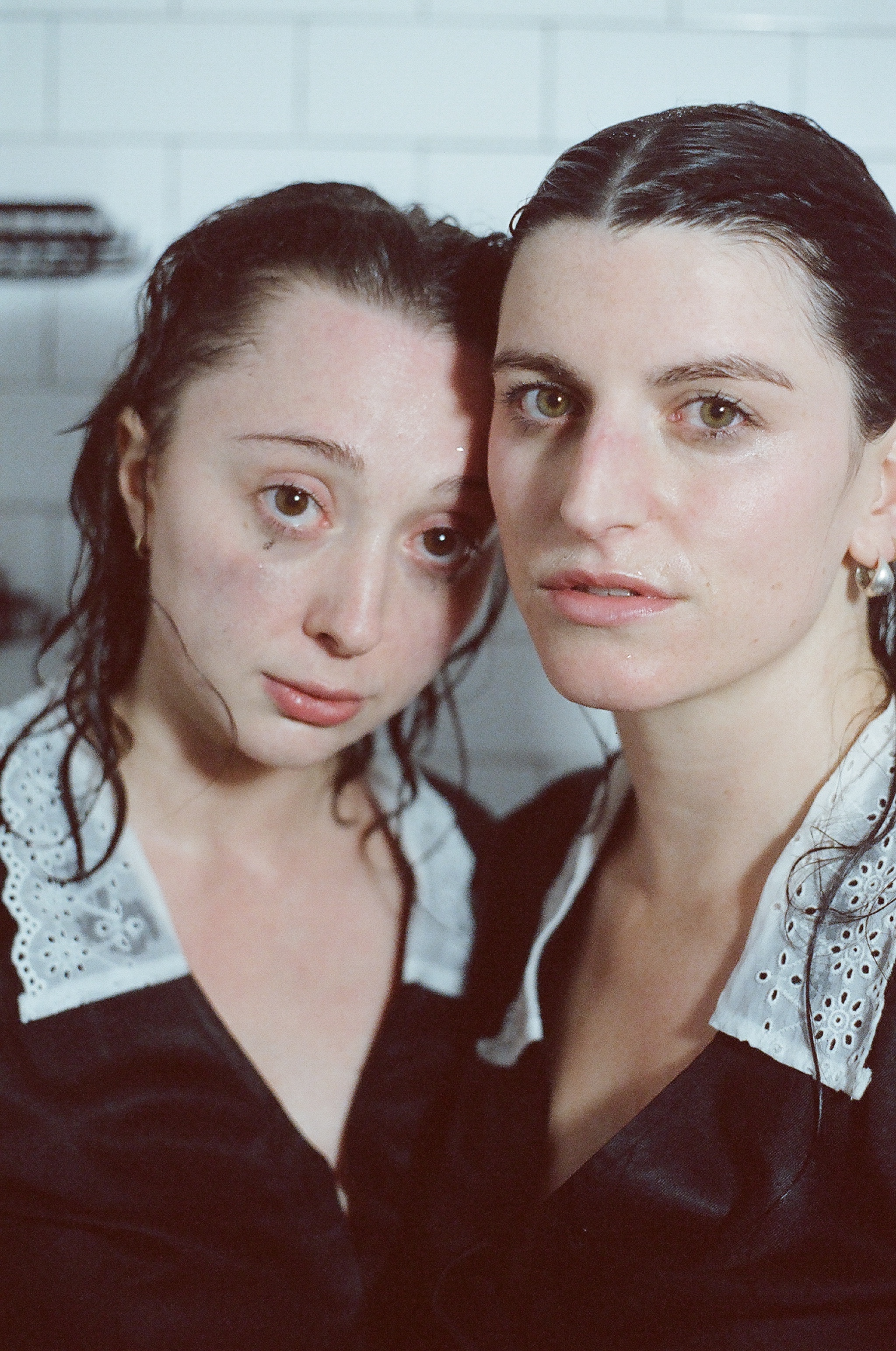
As per the Studio Darlings series at Adult Film, this production, an adaptation of Jean Genet's 'Maids' was born out of Ryan Czerwonko's Long Form Process class. As directors and stars of the piece, Madeleine Bernhard and Hannah Hale, worked together on the scene from Uncle Vanya between Sonja and Elena where the two connected over their similar working styles, encouraging a further exploration of their duality and relationship as actors.
Directly after summer productions of Woyzeck, a great success for the company, Maids began its theatrical run, where Bernhard and Hale went from actor and understudy, to combination actor/directors in a three-person show, mainly propelled by the two of them.
I have a long standing personal interest in Jean Genet as an author, and I have been primarily interested in his depictions of masculinity, homosexuality between men, and criminality as virtue. I find Maids to be an interesting piece, as it's centered around women, but when properly interrogated and placed within the context of works such as Our Lady of The Flowers the expectations of roles and performance are constructed around the ideas of what it means to be; or play at being; a woman, a man, a madame or a maid, a sister, a lover, a boss and employee etc.
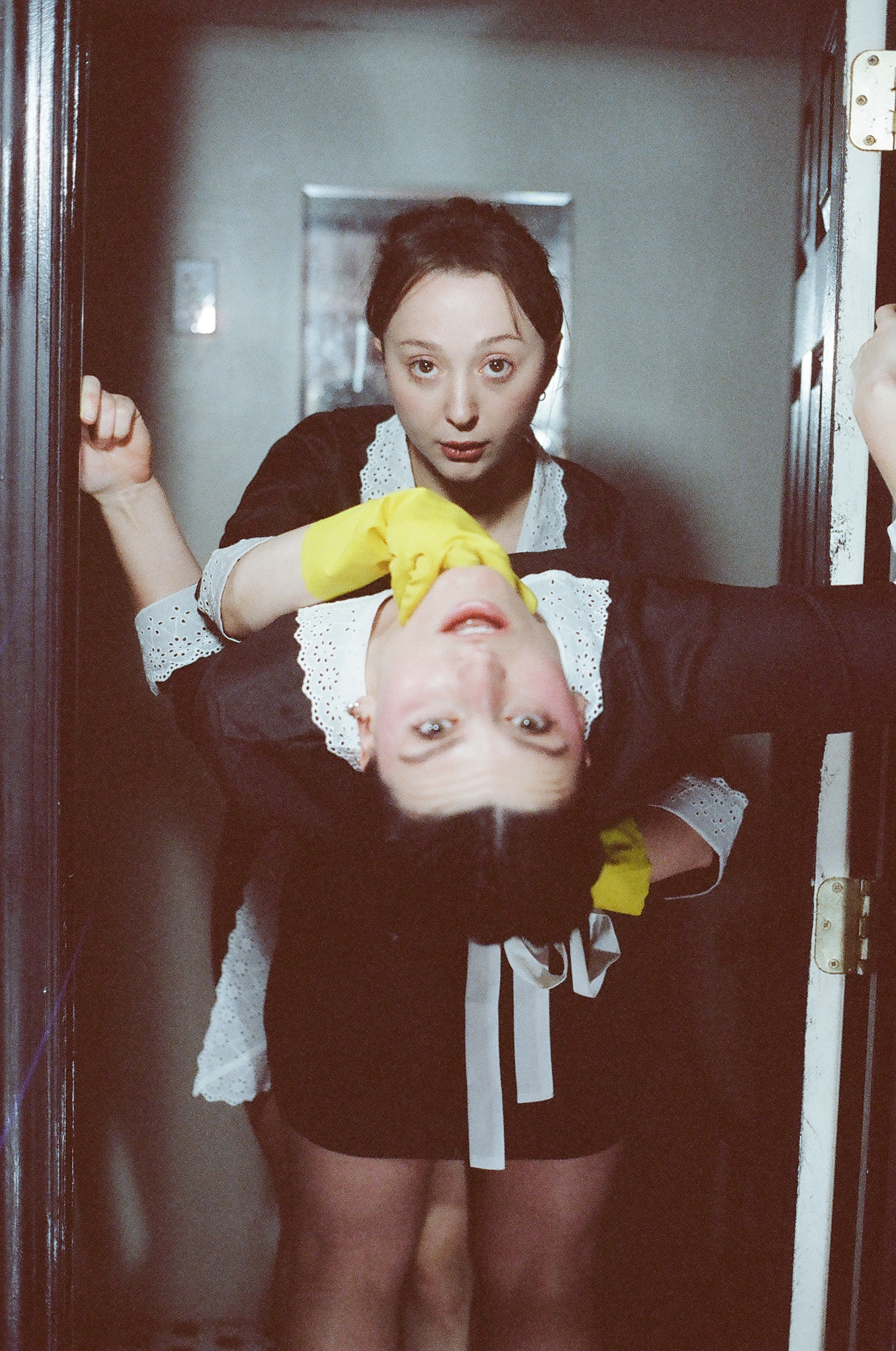
When entering the studio space, there is no clear demarcation between stage and audience, with the viewers placed nearly in the center of the room as actors traverse both in front, to the side, and sometimes behind them. Though minimal, the set pieces are striking and provide not only a view into the source material but in the way that it is transformed by Hale and Bernhard. Time and place are obscured, though visually and through dialog there are references that keep the play situated in its 1940s French setting, it doesn't feel like a historical piece, rather one that is stripped down to its humanity and dichotomy between authenticity and artifice. The set design includes the gown and fur coat belonging to the Madame, her vanity and wig, a small analog television, a mop bucket, and the bare mattress belonging to the maids. In the corner there was an illuminated dollhouse, calling into mind the self reference of acting as one character, acting as another, and placing an importance on self created drama as it becomes reality.
Though (perhaps) inspired by tragic real world events, and the mythologizing of criminals; i.e the roles we place on them; the play is brought to life in a way that is thoroughly enjoyable. All three actors are unafraid of flamboyance, intimacy with each other and the audience, and the possibility of over-acting, as is necessary for the piece. The precise attention to detail in the characters' rituals, whether they are their real and assigned roles, or roles given to each other to reenact a power divide, are the inciting comedic events given the phrase "comedy is tragedy plus time," and in this case, it is running out of time where the dramatic irony lies.
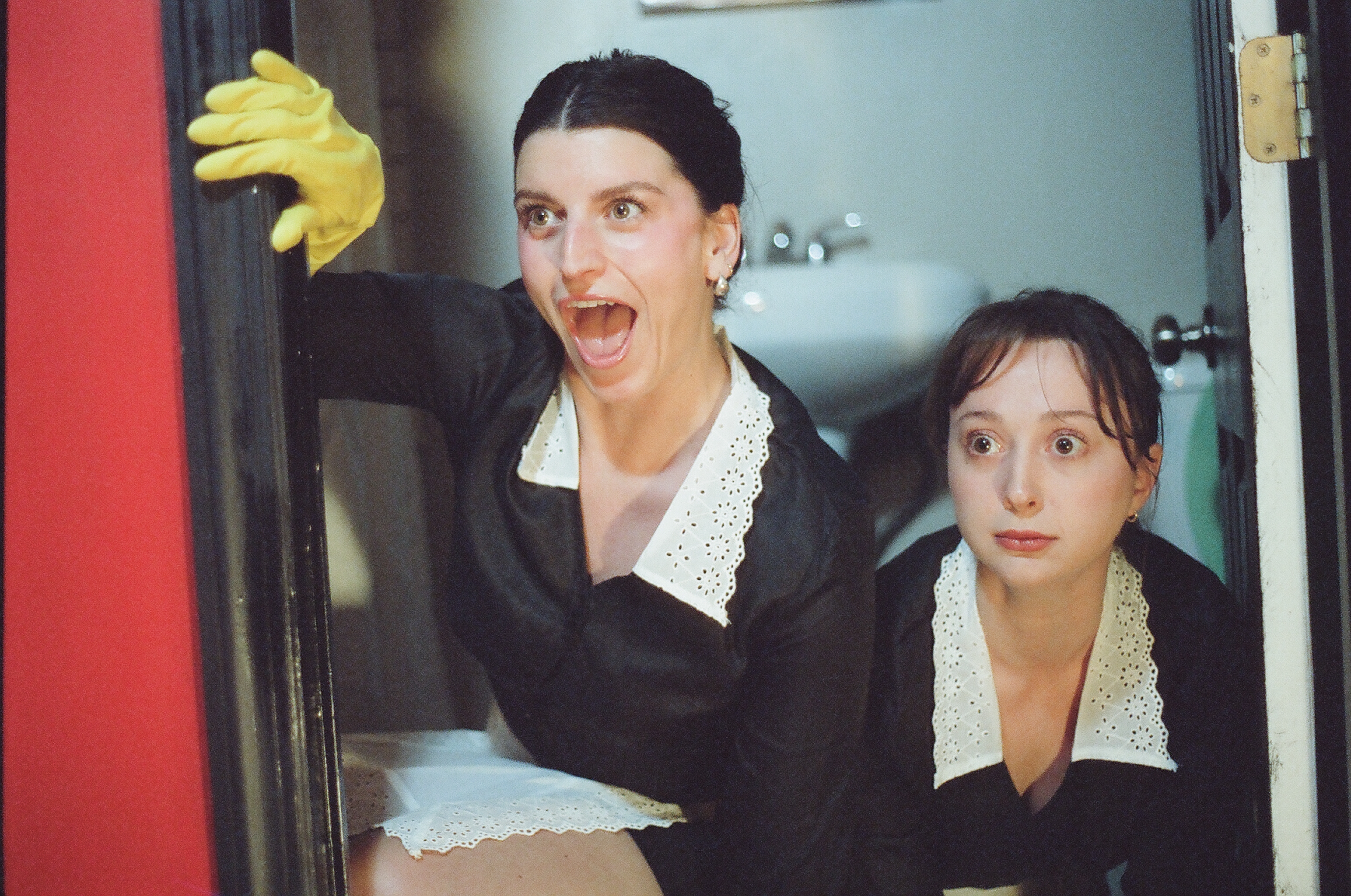
As a study on process and acting, the show is an exercise in developing the way an actor can bend reality, how multiple people can play mirrors of each other, of their characters, and of their characters playing other characters.
The Turn of the Screw
Directed by Jackson Paul Walker and starring Kaley McConnaughey and Stephen Ochsner
The next show in the Studio Darlings series, after a rescheduling of the mystery show with the code name 'American Spirits', was an adaption of Henry James' novella The Turn of the Screw. Appropriately shown on Halloween weekend, James' ghost story was transformed into a minimalist reimagining that blurs the existence of the supernatural with the spectre-nature of human morality.
The theme of the story; the presumption and inevitable destruction of childhood innocence, the literal or figurative haunting of corrupting behaviors via adult caretakers, the hubris intrinsic to being an adult authority figure; is tripped down to absolute symbolic necessity by having only two actors for every character.
The central character, the Governess, is played brilliantly by Kaley McConnaughey, as her co-star, Stephen Ochsner, fluidly embodies almost all of the other characters. One exception, however, is the absent mute child Flora, only directly referenced via McConnaughey's reflection in a hanging mirror.
Though it is a period piece, and there is no direct attempt to adapt the text into the present day, the set is brought to life through a series of anachronisms. Many set pieces are merely mimed or to be imagined, and only objects with a direct blocking cue are included, particularly ones that have their own sense of movement - a quill pen, multiple candles, and the anachronisms: a paper shredder, electric guitar instead of a piano, a TV screen with static as its own ghost interpreter.
The exercise in emerging the audience into the story using only two actors falls in the subtle changes between both the changes in character and reactions to each character. As Ochsner changes from the house servant Mrs. Grose to the young boy Miles, McConnaughey's Governess changes her demeanor as she develops from naive and doting caretaker to frenzied and neurotic.
Thematically, the use of an adult actor playing a child, particularly one that is, at times, overly mature and seen to be 'corrupted', exacerbates the uneasiness of the child's behavior, as well as that of the adults around him. The idea of a child misbehaving not out of typical childhood 'naughtiness' but out of what both child and Governess understand as being fundamentally 'bad' introduces a social dilemma. One that, if MIles was played by an actual child, the audience could more easily dismiss as being a product of either past abuse or actual haunting, in way that can be forgiven. Played by an adult, the behaviors are more easily accepted as calculating, cruel, or overly forward, as well as seen as more disturbing.
As a study in process, the transformation of the text is an exercise in character fluidity and exploration between what is 'real' or 'imagined'. Through the suspension of disbelief we can easily understand that the ghosts are 'real' as described in the text, or we can understand the performance as the Governess's hallucination of ghosts, and the 'reality' being the past abuse endured by children from the previous caretakers. Either understanding requires the suspension of disbelief, as is the nature of theater, we are to believe that we're in a house called Bly, that our actors are the character that they embody, that the year has changed, that a guitar is a piano, that a mirror image of an adult is a child and so on. This production, as Maids did as well, interrogates what acting can mean as its presented to an audience.
It's wonderful to watch this level of artistic thoughtfulness be presented without preconieved notions of what theater is or can be. It's exciting to be a part of the reimagining of an artform that predates film can mean in our contemporary times. There is no need to reinvent the wheel, but there isn't any need to stick directly to tradition, either. Studio Darlings meets its audience on its own evolving terms.